A quick overview of each app
YNAB
YNAB is built around a specific budgeting philosophy called zero-based budgeting, the idea of giving every dollar a job before you spend it. It is a proactive, forward-looking approach to money management that goes beyond simple expense tracking.
YNAB's features page highlights bank import, goal tracking, spending reports, and a loan planner tool, and its pricing page says one subscription can be shared with up to six people.
The trade-off is the learning curve. YNAB has its own terminology, its own workflow, and a setup process that can take a while to feel natural.
BudgetEase
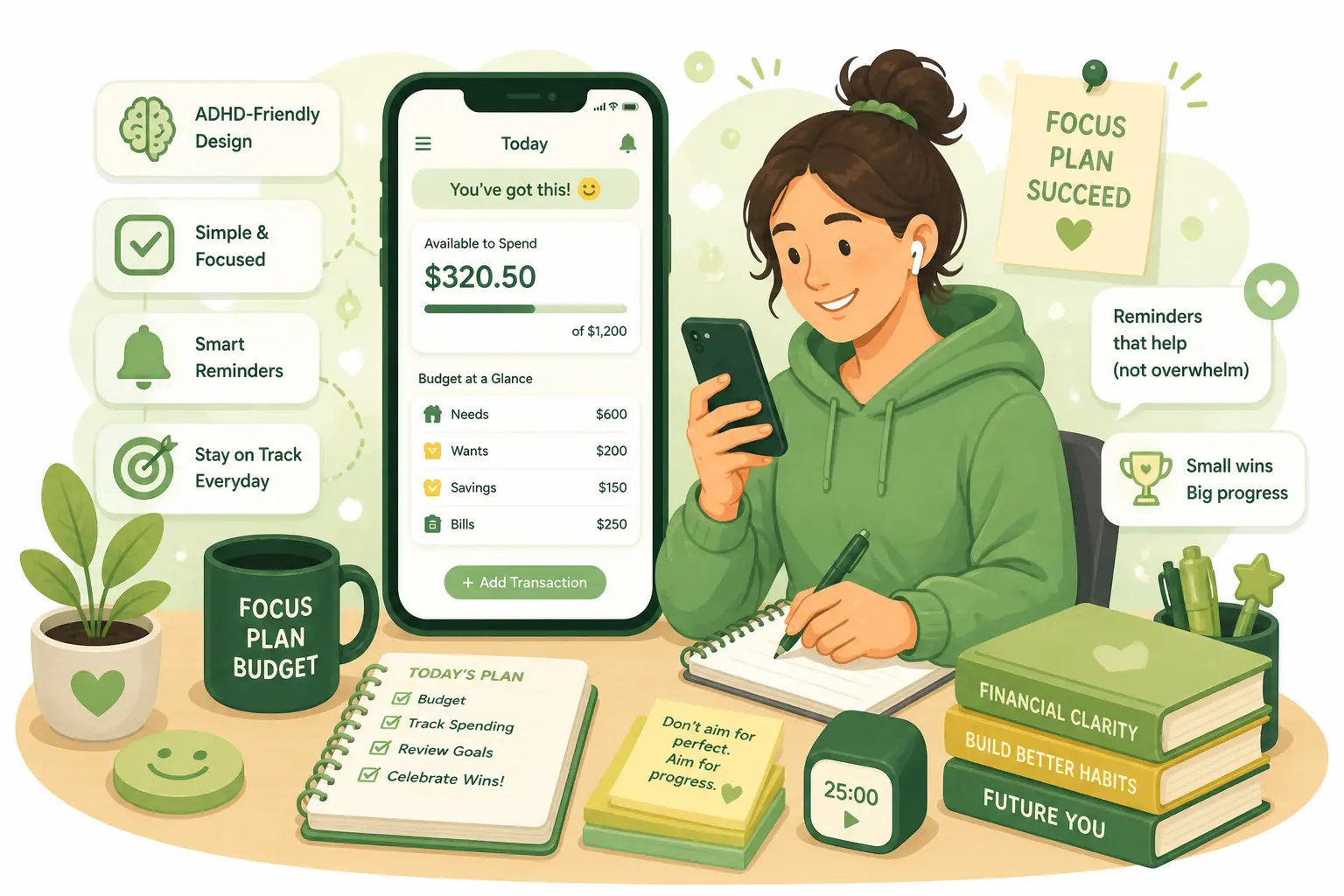
BudgetEase is a mobile-first budgeting app designed around simplicity and accessibility. It is built for people who want a clear, honest picture of their finances without committing to a complex methodology.
BudgetEase uses manual expense tracking. You log what you spend, assign it a category, and the app shows you where your money is going. If you want to see why that lower-friction approach works well for many people, our guide on how to track expenses without a spreadsheet breaks down the habit side of it.
No bank connection is required, and there is no new budgeting philosophy you need to master before you can get started.
Pricing: how much does each app cost?
This is often the first question, and it is where the two apps differ most.
| BudgetEase | YNAB | |
|---|---|---|
| Free tier | Yes, core features are free to start | No, 34-day trial only |
| Paid tier | Freemium upgrade available | $109/year or $14.99/month |
| Free trial | Free tier is ongoing | 34 days, no credit card required |
| Student offer | No dedicated student plan listed | Free 365-day college program |
| Family sharing | Not a core selling point | Up to 6 people, one subscription |
| 5-year cost | Free or low freemium cost | Around $545 at current annual pricing |
YNAB's pricing page currently lists $109/year or $14.99/month, plus a 34-day free trial when you sign up directly through YNAB. If you are in college, YNAB's college program says eligible students can get a free 365-day trial.
YNAB's price can make sense if you commit to the methodology and fully use the system. But if you are unsure whether the workflow fits you, it is still a meaningful recurring cost.
BudgetEase's free-to-start model means you can begin using it without making that commitment up front.
Winner on pricing: BudgetEase, especially for beginners, students, and anyone not ready to commit to an annual subscription.
Features: what does each app actually do?
| Feature | BudgetEase | YNAB |
|---|---|---|
| Expense tracking | Yes, manual entry | Yes, automatic bank sync plus manual |
| Budget categories | Yes, customizable | Yes, customizable |
| Savings goals | Yes | Yes |
| Spending reports | Yes | Yes, more advanced |
| Bank account sync | No, manual only | Yes |
| Debt payoff tools | No dedicated payoff calculator | Yes |
| Zero-based budgeting | No | Yes, core methodology |
| iOS app | Yes | Yes |
| Web app | Yes | Yes |
| Family sharing | Not a major focus | Yes |
| Learning curve | Low | Medium to high |
YNAB clearly offers more advanced features. For people who want detailed insights, automated sync, and a structured debt-payoff workflow, that can be a real advantage.
But features only matter if you use them. Complexity is also a barrier. A lot of people are better served by a simpler system they will actually stick to.
Winner on features: YNAB for power users.
Winner on usability: BudgetEase for people who want to start fast and keep going.
Privacy and data: who has access to your financial information?
YNAB connects bank accounts through Plaid, a third-party financial data provider. If you use a Plaid-connected app, Plaid explains that it collects the data needed to power the service you chose and maintain the connection you approve.
BudgetEase uses manual tracking only. You enter your expenses yourself, and there is no bank connection step. For privacy-conscious users, that is a real advantage.
Winner on privacy: BudgetEase because manual tracking keeps your bank details out of the setup process.
Ease of use: which app can you pick up and use today?
YNAB has a well-documented learning curve. The zero-based budgeting approach asks you to understand how the system wants you to think about money, not just how to log transactions.
BudgetEase is designed to be usable within minutes. Open the app, set up categories, start logging expenses, and you are moving. If you are in the stage where you are still building your first dependable routine, a simple monthly budget for your first paycheck pairs naturally with that kind of simpler setup.
Winner on ease of use: BudgetEase.
Who is each app actually built for?
YNAB is the right choice if you:
- want a structured zero-based budgeting system
- are comfortable linking bank accounts
- are willing to invest time learning a more opinionated workflow
- want advanced reporting and debt-planning tools
- share finances with a partner or family and want one subscription
BudgetEase is the right choice if you:
- are new to budgeting and want something you can start using today
- want a free or lower-cost option without an annual commitment
- prefer manual tracking and want more privacy
- are building your first real budget as a student or young professional
- want something simple enough to keep up with in family life
- tried more complex tools and found them harder to stick with
If that last profile sounds familiar, our article on budgeting tips for young professionals is a useful companion read.
A side-by-side summary
| BudgetEase | YNAB | |
|---|---|---|
| Best for | Beginners, families, young professionals | Power users, debt-focused budgeters |
| Price | Free plus freemium | $109/year or $14.99/month |
| Setup time | Minutes | Can take weeks to feel natural |
| Bank sync | No | Yes |
| Privacy | Higher, no bank linking | Lower, third-party bank connectivity |
| Learning curve | Low | Medium to high |
| Free tier | Yes | No |
| Methodology | Flexible | Zero-based budgeting |
The honest bottom line
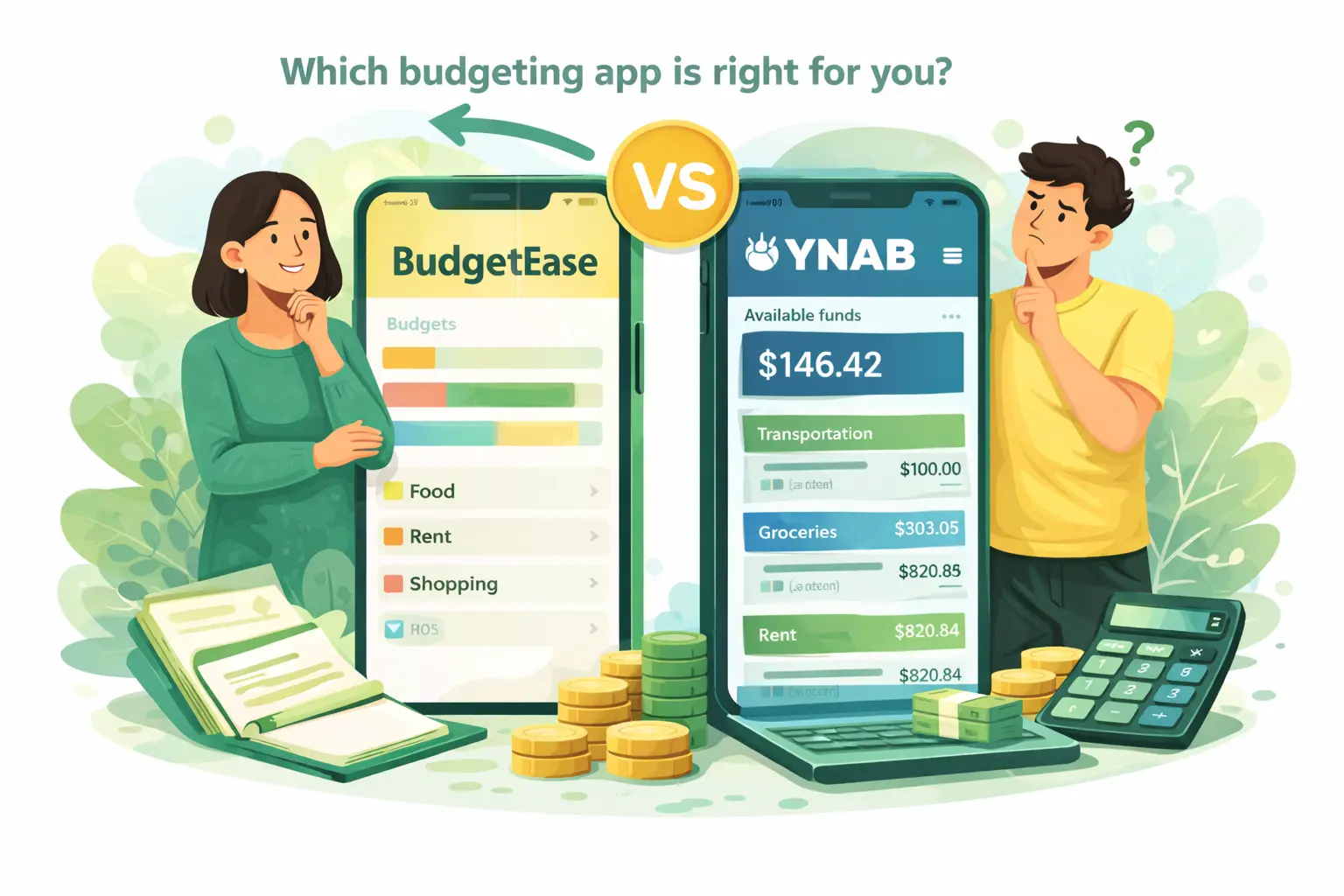
YNAB and BudgetEase solve slightly different problems.
YNAB is a full financial behavior-change system. If you want structure, deeper tooling, and a budgeting method you can really lean into, it can be a strong fit.
BudgetEase is for people who want simplicity, speed, and control without the extra learning curve. That makes it a particularly good fit for beginners, young professionals, and families who want a budgeting app that feels useful on day one.
The best budgeting app is not the one with the longest feature list. It is the one you will actually open tomorrow.
Download BudgetEase on the App Store
Download BudgetEase on Google Play.
Frequently asked questions
Is BudgetEase completely free?
BudgetEase is free to download and use, with core budgeting features available from the start. A paid upgrade is available for users who want additional features.
Does YNAB have a free version?
YNAB does not have a permanent free tier. It offers a free trial and then moves to a paid subscription.
Is YNAB really worth it?
YNAB can absolutely be worth it for the right person. If you want a structured zero-based budgeting system, plan to use the app regularly, and will take advantage of the reports, bank sync, and payoff tools, the subscription can be justified.
But if you mainly want a simple way to track spending and stay consistent, YNAB may feel like more system and more cost than you actually need. In that case, a simpler option like BudgetEase may be the better value.
Can I switch from YNAB to BudgetEase?
Yes. You can start fresh in BudgetEase by creating categories and logging expenses from your current point forward.
Is there a better budget app than YNAB?
"Better" depends on what you need. If you want advanced structure, bank sync, and a full budgeting methodology, YNAB may still be the better fit for you.
If you want something easier to start, easier to stick with, and free to begin using, BudgetEase can be a better choice than YNAB. For a lot of people, the better app is the one that feels simple enough to use consistently.